
5S Organization System for Small Spaces
Adapt the proven 5S methodology to tight workshop or office spaces. We've seen this cut setup time by 30% in local businesses.

Why 5S Matters for Tight Spaces
You don't need a warehouse to benefit from 5S. In fact, small spaces demand it. We've worked with Mong Kok manufacturers, repair shops, and offices where every square meter counts. The 5S system isn't complicated — it's just five steps that make space do more work.
Here's the reality: clutter doesn't just waste space. It wastes time. Your team spends 15 minutes looking for a tool that should take 15 seconds to find. That adds up. When you organize properly, people work faster. Setup takes less time. Production flows better. We're talking real improvements you can measure.
Proven methodology anyone can apply
Typical setup time reduction observed
Works within your existing footprint
The Five Steps Explained
Each step builds on the previous one. You can't skip ahead — that's where people struggle. Start with Step 1, finish Step 1, then move on.
Sort (Seiri)
Remove everything you don't actually use. Be honest. That broken drill you've kept for two years? Gone. The materials left over from a job six months ago? Out. You're not being wasteful — you're making space for what matters. In a 400-square-foot workshop, this alone can free up 15-20% of your floor.
Set in Order (Seiton)
Organize what's left. Everything has a home. Your most-used tools go closest to where you work. Heavy items go lower. Light items up high. Label everything. Yes, really — labels seem silly until someone new starts and knows exactly where to find a wrench because it's labeled on the shelf. This is the step that saves 15 minutes every morning.
Shine (Seiso)
Clean everything. Don't confuse this with "janitorial cleaning." Shine means deep clean. Wipe down shelves, sweep corners, remove dust from equipment. While you're cleaning, you notice problems — a hose that's cracking, a bin that's rusting. You catch these before they become expensive failures. Plus, people work better in clean spaces. It's not just psychological.
Standardize (Seiketsu)
Create rules so it stays organized. Document where things go. Create a simple one-page guide showing shelf layouts, labeling conventions, and cleaning schedules. Assign someone to check once a week — takes 10 minutes. This is where most businesses fail. They do steps 1-3 beautifully, then after three months it's chaos again. Standardization prevents that.
Sustain (Shitsuke)
Keep it going. This is a habit, not a project. Make organization part of your daily routine — not a big cleanup day once a month. Five minutes at the end of each shift. It's easier to maintain than to rebuild. When you sustain it, the benefits compound. After six months you're not just saving time — you're preventing problems before they happen.

Runevast Editorial Team
Editorial Team
Written by the runevast editorial team, focused on practical, honest guidance for lean process improvement in small and medium-sized businesses.
Making 5S Work in a Tiny Space
Small spaces need specific strategies. You can't just scale down a factory approach. We've worked with repair shops that are 300 square feet. Storage isn't an option — everything has to earn its place.
Vertical is your friend. Wall-mounted shelving, pegboards, and hanging racks triple your effective storage without eating floor space. A standard 8-foot wall can hold what would need a 3-foot footprint on the floor.
Use clear containers, not opaque boxes. You want to see what's inside without opening anything. This cuts search time dramatically. Label the front and spine. Mobile carts work better than fixed furniture — you can move them based on what you're working on that day.

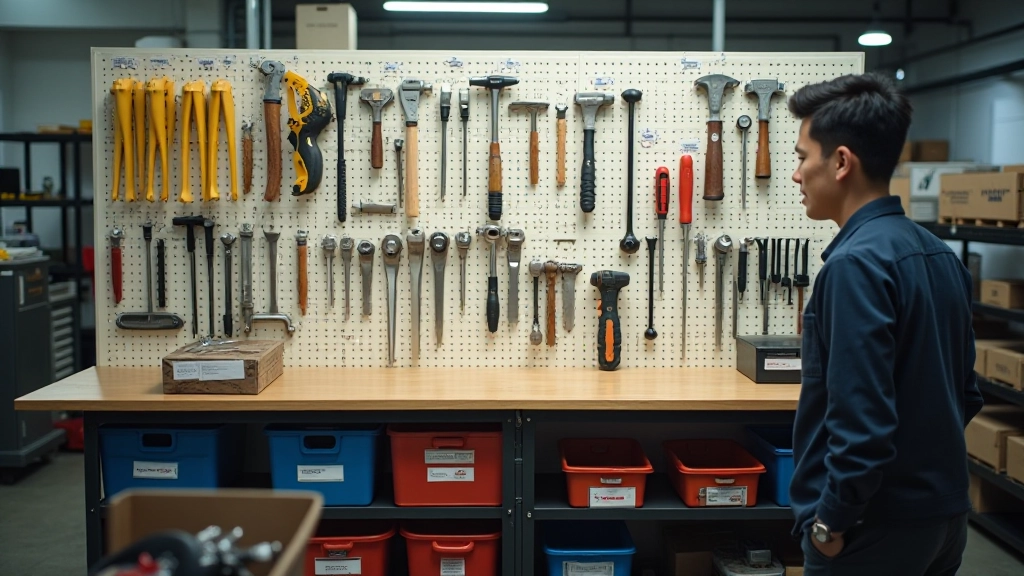
Tools and Supplies You'll Need
You don't need special equipment for 5S. Seriously. Most of what you need you probably have.
- Labels and tape: A label maker and some masking tape. Spend 50 on this. Changes everything.
- Clear containers: Various sizes. You see what's inside. Cost varies but worth it.
- Wall hooks and shelving: Vertical storage. Pegboards are cheap and adjustable.
- A checklist: One-page guide for your team. Print it. Post it. Done.
- A timer: For your weekly 10-minute check. Keeps it honest.
That's it. You're not buying a management system or hiring consultants. You're buying materials to organize what you have.
Common Mistakes People Make
Skipping Sort
People want to organize first. Don't. Get rid of the junk first. You can't organize your way out of having too much stuff. Sort ruthlessly. If you haven't used it in a year, it goes.
Doing It Alone
Make your team part of the process. They know where things should go better than you do. They'll use the system more if they helped design it. Get input. It takes longer but lasts longer.
Forgetting Standardize
This is the step that separates success from failure. Without documented standards, you're back to chaos in three months. Create a simple one-page guide. Assign a weekly check. This is non-negotiable.
Expecting Perfection
5S isn't about perfection. It's about functionality. Your space doesn't need to look like a showroom. It needs to work. Every minute. Done is better than perfect.
What Actually Happens After 5S
We're not going to promise miracles. But we've seen consistent improvements in businesses we've worked with.
Setup time drops. Your team finds tools faster. New people get productive quicker because everything's labeled and logical. Accidents decrease because you're not tripping over stuff. Quality improves because people aren't rushed. Morale gets better — people prefer working in organized spaces. It's not complicated psychology.
"Wasn't expecting much to be honest. We're a small shop, thought organization was just about being neat. But three months in, we're not hunting for parts anymore. Setup that used to take 45 minutes is down to 30. That's real time."
— Workshop manager, Mong Kok
Start small. Pick one area — your workbench, a single shelf, a corner of the office. Go through all five steps completely. See how it feels. Then expand. You'll figure out what works for your specific space.

About This Guide
This guide is educational material designed to introduce the 5S methodology and its practical applications for small spaces. Results vary based on implementation, existing conditions, and commitment to the process. The specific improvements mentioned (such as the 30% setup time reduction) reflect observations from real businesses but shouldn't be considered guaranteed outcomes for your operation. Every workspace is different. Consider consulting with process improvement specialists for situations requiring detailed assessment or specialized advice. This content is intended to inform and guide, not to replace professional evaluation of your specific circumstances.
Getting Started Today
You don't need a consultant. You don't need a big budget. You need to commit to five simple steps and stick with them. That's it.
Pick your starting area. Clear it out. Organize it. Clean it. Document how it's organized. Keep it that way. Watch what happens.
Want More on Process Improvement?
Explore other guides in our lean process improvement series. We've got guides on identifying waste, mapping your workflow, and measuring what matters.
Explore All GuidesRelated Articles

Identifying Waste in Your Daily Operations
Learn the seven types of waste that drain efficiency — and how to spot them in your workflow...

Value Stream Mapping Without Complex Tools
A straightforward approach using pen and paper to visualize how work flows through your process...

Measuring What Actually Matters in Your Process
Skip vanity metrics. We'll show you which measurements reveal real problems — and drive real improvements...